



Pain conditions are disorders in which pain is the problem itself or the dominant symptom, ranging from everyday complaints such as lower back and neck pain to syndromes few clinicians ever see. Red light therapy (RLT) delivers red and near-infrared light into tissue, where it acts on inflammation, blood flow, and the nerves carrying pain signals. Human studies have tested that effect across every condition in this guide.
This guide covers 22 painful conditions and the evidence for red light therapy on each: plantar fasciitis, fibromyalgia, foot pain, shin splints, knee pain, lower back pain, tennis elbow, wrist pain, shoulder pain, frozen shoulder, shoulder impingement, neck pain, joint pain, muscle pain, musculoskeletal pain, myofascial pain, chronic pain, postoperative pain, migraines, headaches, anorectal pain and persistent idiopathic facial pain (PIFP). Each section reports what the research found, what they missed, the wavelengths, and the side effects behind every result.
We built the CURE Index (Helio Cure's proprietary scoring system) to weigh human trials on a condition and return a score from 0 to 100 alongside a plain verdict of Effective, Mixed Evidence, or Not Effective. The Index measures how consistently the studies agree as well as how many exist, so 4 trials that all record improvement outrank 43 that disagree. Where fewer than 3 human studies exist, a condition carries no score, and this guide reports each trial on its own terms. Scores run from 45 to 100, and among the wavelengths tested, 830, 904, and 1064 nm appeared most often.

Plantar Fasciitis
Plantar fasciitis is pain and stiffness in the heel caused by irritation of the plantar fascia, the thick band of tissue connecting the heel bone to the toes. That irritation builds with running, long hours of standing, and unsupportive footwear, and the buildup limits walking, standing, and time on the feet.
We evaluated red light therapy for plantar fasciitis across 19 human studies covering 1,123 participants, of which 17 were Effective and 2 were Not Effective. This is why the CURE Index scores the scientific evidence 95 out of 100 with an Effective verdict, which falls inside the Strong Confidence band. Included studies cited 830 nm most often.
Fibromyalgia
Fibromyalgia, or fibromyalgia syndrome (FMS), is a long-term condition that spreads muscle pain across multiple regions of the body. Fibromyalgia is triggered by physical trauma, infection, and prolonged stress. If left untreated, it can reduce work capacity and daily activity.
19 human studies covering 846 participants tested red light therapy on fibromyalgia, and 14 were Effective, 1 was Partially Effective, and 4 were Not Effective. That distribution puts the CURE Index score at 72 out of 100, an Effective verdict inside the Strong Confidence band. The research cited 850 nm wavelength most often.
Foot Pain
Foot pain is any discomfort or ache in the heel, arch, toes, or ankle. It can result from bad shoes, long hours standing, injuries, arthritis, or nerve issues. The exact cause depends on where it hurts and how the pain feels. Walking, standing, and balance all suffer.
Rest would do it, and the foot rarely gets any. Treatment has to work while a person keeps walking. Low-level laser therapy suits that, since the joints and tendons of the foot lie close under thin skin and a probe held against them reaches the tissue directly. Light absorbed there widens the small vessels in the sole and boosts skin temperature, and warmer tissue carries more blood through the painful area. Researchers expect that flow to raise the pressure a foot tolerates before it hurts. Two studies have tested that theory.
Toho University's outpatient clinic in Tokyo supplied the first. Over 5 years, Izukura and colleagues treated 17 patients with chronic foot and ankle pain and published the results in Laser Therapy in 2017. Each received 830 nm light at 20.1 J/cm² in 30-second applications, 8 times a week across 4 weeks. Pain fell on a visual analog scale (VAS), and 15 of the 17 improved, 2 rating the result excellent and 13 good. However, ankle range of motion did not shift, no control group existed, and the authors credited the outcome to laser and postural education together rather than to light alone.
8 classical ballerinas made up the second. Paolillo and colleagues at the State University of Minas Gerais in Brazil applied 808 nm light to their feet twice a week for 3 months, 60 seconds per point at 125 J/cm², and published the results in the Journal of Bodywork and Movement Therapies in 2021. Skin temperature in the plantar arch rose 1.6 °C at the center and 2.3 at the border immediately after treatment. The feet became less tender at 5 of the 7 spots tested, and one-legged standing time went from 23 to 34 seconds on the left foot. However, the right foot showed no change, nobody received a dummy treatment, and a study of 8 ballet dancers says little about ordinary feet.
Shin Splints
Shin splints, or medial tibial stress syndrome (MTSS), is pain along the inner edge of the shinbone (the bone at the front and inner side of the lower leg between the knee and the ankle) that follows repeated impact. Running, sudden jumps in training, hard surfaces, and worn shoes pull the calf muscle away from where it attaches to the bone, and the thin lining over the bone becomes inflamed. That same pulling damages the tiny sensors that tell the brain where the leg is, so balance slips alongside the pain.
Low-level laser therapy (LLLT) reaches the injury without rest or drugs, since the shinbone sits close under the skin along the inner leg. Bone rebuilds itself constantly through two kinds of cells, one laying down fresh bone and one clearing the old, and repeated impact tips that balance toward clearing. Light absorbed in the bone pushes it back toward building, and researchers expect the same light to let the damaged position sensors recover. They built the test around a balance platform rather than a pain scale alone. One trial has run it.
That trial came from Chang and colleagues at the National Defense Medical Center in Taiwan, who published it in Lasers in Medical Science in 2014. They ran a randomized controlled trial on 54 men with lower leg periostitis confirmed by bone scan. 29 received LLLT at 670, 850, 880, and 950 nm, 3 times a day for 5 days at 1.4 J/cm², and 25 received drugs or physical therapy instead. Pain fell from day 1 to day 2 and again by day 5, and postural stability testing (PST) scores dropped by 3.73 units. However, the same scores taken immediately before and after each session showed no change. The control group lost its pain records entirely, and only 2 of its patients finished balance testing. The authors ran no dummy laser, and they listed the small sample, incomplete randomization, and unblinded examiners as limits before calling for larger trials.
Knee Pain
Knee pain is discomfort in or around the knee joint, arising in the cartilage, the tendons, or the joint lining. It can develop after osteoarthritis, overuse, and injury. The pain limits walking, climbing stairs, and standing for long periods.
We evaluated whether red light therapy eases knee pain, and the CURE Index rates the evidence at 90 out of 100, with an Effective verdict inside the Strong Confidence band. The score was based on 8 human studies covering 485 participants, with a split of 7 Effective and 1 Not Effective. 810 nm was the most cited wavelength across studies.
Lower Back Pain
Lower back pain, or lumbago, is pain felt in the lower portion of the back, ranging from a dull persistent ache to sharp localized pain. Common causes include muscle strain, disc problems, poor posture, and prolonged sitting. The pain limits movement, causes stress, and disturbs sleep.
Red light therapy was put to the test across 43 human studies on lower back pain covering 3,516 participants, which split into 34 Effective, 2 Partially Effective, and 7 Not Effective. This led to the CURE Index score of 76 out of 100, an Effective verdict that falls within the Strong Confidence band. Across studies, 1064 nm appeared more often than any other wavelength.
Tennis Elbow
Tennis elbow, clinically termed lateral epicondylitis, is an overuse condition in which repeated strain irritates the tendons on the outside of the elbow. Caused by repetitive wrist extension and gripping motion, it leads to localized pain, stiffness, and weakened grip strength that can make everyday tasks difficult.
19 human studies on tennis elbow covering 1,784 participants tested red light therapy, and 15 reported it Effective, 1 Partially Effective, and 3 Not Effective. The CURE Index converts that record into 82 out of 100, an Effective verdict with Strong Confidence. The most cited wavelength across studies was 904 nm.
Wrist Pain
Wrist pain is any discomfort or ache in the wrist joint. It often comes from sudden injuries like falls or from ongoing stress like typing or sports. The effects include reduced grip strength, joint stiffness, numbness or tingling in the fingers, and a limited ability to perform routine tasks like typing, writing, or lifting objects.
Rest and anti-inflammatory drugs treat most cases. Laser therapy is considered last because the machines live in clinics, and 15 sessions means 15 trips. A unit small enough for a pocket removes the trips. LLLT at 650 and 830 nm now fits 48 millimeters across and weighs 28 grams, held against the sore wrist at home. Absorbed light prompts new blood vessels and collagen in the joint, and acts on the inflammation around the tendons. Researchers expect that repair to lower the pain and rebuild grip and pinch strength. One trial has tested a home unit against a fake that looks and glows the same.
In 2024, Yun and colleagues at Jeonbuk National University Medical School in Jeonju, Korea, reported a single-blind randomized trial in Lasers in Medical Science. 30 adults with moderate wrist pain treated themselves for 30 minutes a day, 5 days a week, across 3 weeks. 15 used a working unit delivering 9.54 J/cm² per session, and 15 used a look-alike that glowed red without emitting laser light. Pain fell in both arms, from 4.93 to 3.67 with the laser and from 5.53 to 4.00 with the look-alike, and the gap between them was not significant. However, only the laser arm improved on the function scale of the patient-rated wrist evaluation (PRWE), and neither arm reported a side effect. The fake matched the laser on pain, so the laser's own contribution was unproven.
Shoulder Pain
Shoulder pain is pain felt in or around the shoulder joint and the soft tissues surrounding it. Rotator cuff tendinitis, bursitis, frozen shoulder, arthritis, and acute injuries like strains or dislocation are common causes. The physical and lifestyle effects include reduced arm mobility, sleep disruption, muscle weakness, and trouble performing daily tasks.
Our review of 8 human studies on red light therapy for shoulder pain, covering 564 participants, returned 6 Effective ratings and 2 Partially Effective, with none Not Effective. The CURE Index scores the evidence 96 out of 100 with an Effective verdict inside the Strong Confidence band. 1064 nm was the most cited wavelength.
Frozen Shoulder
Frozen shoulder, or adhesive capsulitis, is stiffness and pain in the shoulder joint that builds as the capsule around the joint thickens and tightens. That tightening is often due to an injury, surgery, or long spells without moving the arm. The stiffness impacts overhead reach, dressing, and sleep on that side.
We analyzed 5 human studies of red light therapy for frozen shoulder covering 294 participants, of which 4 were Effective and 1 was Partially Effective. The CURE Index ranks that evidence at 79 out of 100, an Effective verdict inside the Strong Confidence band. Of the wavelengths tested, 1064 nm came up most.
Shoulder Impingement
Shoulder impingement is the pinching of soft tissue beneath the top of the shoulder blade, where tendons and the sac that cushions them catch against bone. This occurs due to overuse, muscle imbalances, or bone spurs, causing sharp pain, weakness, and a limited range of motion.
5 of 10 human studies of red light therapy for shoulder impingement were found Effective, 1 was Partially Effective, and 4 were Not Effective across 707 participants. That split leads the CURE Index to 45 out of 100, a verdict of Mixed Evidence inside the Moderate Confidence band. The evidence cited 904 nm and 1064 nm most often.
Neck Pain
Neck pain is discomfort, stiffness, or restricted movement in the neck. Most cases trace this pain to desk work, phone use, and whiplash injury. The recorded effects are limited movement, followed by headaches and disturbed sleep.
The CURE Index scores red light therapy 85 out of 100 for neck pain, an Effective verdict inside the Strong Confidence band. That number was backed by 18 human studies covering 1,057 participants, of which 15 were found Effective, 2 Partially Effective, and 1 Not Effective. Studies cited 830 nm above every other wavelength.
Joint Pain
Joint pain is any discomfort, ache, soreness, or stiffness in the body's joints where bones meet. It can affect a single joint or multiple joints, ranging from mild irritation to severe pain that limits movement. Injuries like sprains and autoimmune diseases like rheumatoid arthritis have been traced back as the primary causes, with short-term swelling to long-term mobility loss and chronic fatigue as primary effects.
Drugs that calm an autoimmune joint affect the whole immune system to settle a few joints, so a treatment aimed at a single joint is worth testing. High-intensity laser therapy (HILT) sends 1064 nm light deep enough to reach the joint capsule, where weaker beams stop at the skin. Light arriving at that depth opens local blood vessels and slows the release of inflammatory signals inside the joint, which is expected to result in less swelling, less tenderness, and a firmer grip. Two studies have tested it.
The stronger of the two came from Cairo University, where, in 2020, Abdel-Aal and colleagues ran a double-blind randomized controlled trial on 50 adults aged 30 to 50 with hand joints damaged by systemic lupus erythematosus. Both groups received routine physical therapy 3 times a week for 8 weeks. Half the group added HILT at 1064 nm, while the other half received a switched-off laser. Handgrip strength, swollen joint counts, tender joint counts, and pain on a visual analog scale (VAS) all favored the laser group. However, every participant had lupus, so the result covers inflamed hand joints, not joint pain generally.
The second study dates to 1990, when Petrachi and Matzuzzi at Tor Vergata University in Rome treated joint, tendon, and muscle complaints with a gallium arsenide cold laser between 780 and 830 nm. They reported pain shrank or vanished across almost every disorder they saw, and function returned with it. However, the report names no sample size, publishes no measurements, and uses no comparison group. It records what clinicians observed, not what the laser did.
Muscle Pain
Muscle pain, also called myalgia, is an ache or discomfort in any part of the body's soft muscle tissue. Its primary causes are physical overuse, injury, infection, and underlying illness, and the effects run from short-lived stiffness and fatigue to lasting limits on movement. Muscle relaxants and painkillers handle the worst of it, and their side effects are the reason clinicians keep looking for alternatives.
That search led them to light, including intravascular photobiomodulation (iPBM). However, iPBM puts no light on the skin at all. A thin optical fiber enters a vein through a catheter and delivers 632.8 nm red light straight to the blood for an hour at a time. Researchers expect light absorbed by circulating blood cells to increase how much oxygen they carry, and that extra oxygen to reach sore muscle. One retrospective review has evaluated patients who received it.
In 2023, Lin and colleagues at Kaohsiung Veterans General Hospital in Taiwan reviewed 183 patients treated between 2013 and 2021 and published the results in Medicina. 128 reported pain somewhere in the body, and 18 reported insomnia. Sessions ran for 60 minutes at 2.5 milliwatts, delivering 9 joules each. Hemoglobin and hematocrit both rose. However, the review measured no muscle pain at all, compared patients only against their own earlier records, and found no fall in drug use. The authors asked for larger studies with symptom scales before anyone concludes that muscle soreness changes.
Musculoskeletal Pain
Musculoskeletal pain affects bones, muscles, ligaments, tendons, and joints. It stems from sudden injuries, poor posture, or long-term diseases like arthritis. This pain causes stiffness, sleep problems, and daily mobility limits.
We examined 8 human studies of red light therapy for musculoskeletal pain covering 395 participants, of which 7 were Effective and 1 was Partially Effective. The evidence led to a CURE Index score of 92 out of 100, with an Effective verdict, which is inside the Strong Confidence band. Studies leaned most on 810 nm and 830 nm.
Myofascial Pain
Myofascial pain is a chronic condition where pressure on sensitive, tight muscle knots, called trigger points, causes deep aching pain in the muscle or referred pain in unrelated body parts. It is primarily caused by muscle overuse, repetitive motions, injuries, and stress, leading to effects like sleep loss, fatigue, and reduced movement.
22 of 25 human studies of red light therapy for myofascial pain were Effective, and 3 were Not Effective across 1,466 participants. The CURE Index ranks that record at 87 out of 100 with an Effective verdict inside the Strong Confidence band. 904 nm appeared more than any other wavelength across studies.
Chronic Pain
Chronic pain is persistent pain lasting longer than three months. It is characterized by physical conditions like nerve damage, arthritis, and old injuries. The effects reach far past physical discomfort, including disturbed mental health, daily routines, and overall life quality.
The CURE Index scores red light therapy 92 out of 100 for chronic pain, an Effective verdict inside the Strong Confidence band. That score rests on 8 human studies on chronic pain covering 1,270 participants, where 7 were Effective, 1 was Partially Effective, and none were Not Effective. The studies recorded 830 nm as the most cited wavelength.
Postoperative Pain
Postoperative pain is the pain that follows surgery, rising from the tissue an operation cuts and running hardest in the first days afterward. The size and site of the incision set how strong that pain runs, and its strength decides how quickly sleep, movement, and normal activity return.
15 human studies of red light therapy for postoperative pain were Effective across 1,003 participants. That record led to a CURE Index score of 100 out of 100, an Effective verdict inside the Strong Confidence band. Across studies, 660 nm and 808 nm were the most cited wavelengths.
Migraines
A migraine is a neurological disorder that brings on repeated headache attacks with nausea, light sensitivity, and sound sensitivity. Stress, broken sleep, hormonal shifts, and skipped meals trigger the attacks, and each attack costs hours or days of normal life.
Red light therapy for migraines scores 98 out of 100 on the CURE Index, an Effective verdict inside the Strong Confidence band. All 4 human studies on migraines covering 180 participants were found Effective. The most cited wavelengths were 808 nm, 810 nm, and 904 nm.
Headaches
A headache is pain anywhere in the head or upper neck. They are of two kinds: primary headaches caused by brain activity, nerves, or blood vessels, while secondary headaches are caused by an underlying external disease, injury, or medical problem. The effects vary greatly depending on the severity of the pain, ranging from mild dizziness to pain severe enough to stop daily activities. Painkillers work at first, but taken often enough, they begin causing headaches of their own.
Laser acupuncture puts near-infrared light on the points a needle would reach, at the wrist, hand, brow, and base of the skull. Light absorbed there widens the small vessels beneath and loosens the muscle driving the pain. Researchers expect that loosening to cut how hard a headache hits and how often it arrives. Two trials have tested it.
In 2005, Ebneshahidi and colleagues at Isfahan University of Medical Sciences in Iran randomized 50 patients with chronic tension-type headache. Patients received 830 nm laser acupuncture or a dummy set to zero output for 43 seconds at each of 4 points on both sides, 3 times a week over 10 sessions. A month later, headache intensity had fallen 5 points on a visual analog scale against 1 in the dummy group, and headache days fell 15 a month against 2. However, the gains shrank at every follow-up, and by month 3 the intensity drop had halved and headache days fell only 8.
The second came from Brazil in 2024, and it aimed light somewhere else entirely. Campos and colleagues at Nove de Julho University strapped a 660 nm laser over the pulse point at the wrist for 30 minutes, once a week across 4 weeks, treating 40 people whose tension headache had outlasted COVID-19 by more than 3 months. Among those who finished, pain fell from 3.42 to 0.33 on the visual analog scale, compared with 3.13 to 1.38 under a matched device that lit up and sounded the same. However, 12 of the 40 dropped out, and the Headache Impact Test found no difference. The advantage vanished once the dropouts were included in the analysis.
Anorectal Pain
Anorectal pain is deep, vague pain in the anus and rectum that shows no cause on examination. Past surgery, disordered defecation, and muscles at the base of the pelvis that never fully relax have been the source of most cases. Sitting becomes difficult, and each bowel movement brings the pain back. Electrical stimulation through a rectal probe and biofeedback training are the standard treatments, and neither provides complete relief.
That gap sent one surgical team after something simpler. A finger examination finds the tender point on the wall of the rectum, and light aimed at that point from outside travels the few centimeters needed to reach it. Polarized near-infrared at 780 to 1400 nm carries further than visible red, warming the tissue and widening the small vessels feeding the clenched muscle. Researchers expect that flow will release the muscle and the pain with it. One case series has tested that expectation.
In 2003, Mibu and colleagues in the surgery department at Kyushu University in Fukuoka treated 35 consecutive patients with intractable anorectal pain and published the results in Diseases of the Colon and Rectum. 14 had undergone lower abdominal surgery, and 18 struggled with defecation. Each session ran 10 minutes over the tender point, and patients received anywhere from 1 to 235 of them, with relief arriving after 2.5 on average. Patients graded their own outcome: 5 excellent, 28 good, 2 unchanged. 4 felt hot during treatment, and 1 urinated more often afterward, but both effects passed. However, the study ran without a control group, and those grades are the only outcome it carries.
Persistent Idiopathic Facial Pain (PIFP)
Persistent idiopathic facial pain (PIFP) is continuous pain in the face or mouth that follows no nerve pathway and shows no cause on examination or imaging. The International Classification of Headache Disorders, Third Edition (ICHD-3) sets the threshold at daily pain lasting more than 2 hours a day across more than 3 months. The causes can be traced back to minor facial injury or dental work in some patients, and the pain then disrupts eating, speaking, and sleep.
With no test to confirm the diagnosis, clinicians reach for treatments that carry little risk. Low-level laser therapy (LLLT) fits that description, putting red and near-infrared light onto the painful spot and touching nothing else, while a systemic drug reaches every organ to treat one small area. LLLT reaches the target because facial and oral pain sites sit within a centimeter of the surface, close enough for a contact handpiece to deliver the beam with little loss. Researchers expect the absorbed light to quiet overactive nerve endings and increase blood flow through the tissue. One study has tested the approach on PIFP.
In 2011, Yang and Huang at the Oral Medicine Center of Chung Shan Medical University Hospital in Taichung, Taiwan, treated 16 patients diagnosed with PIFP. Each patient received 800 nm diode laser light through a handpiece measuring 0.8 or 0.5 centimeters across, held in direct contact with the symptomatic site, at an energy density of 105 J/cm². Treatment ran between 1 and 10 sessions. Average pain fell from 7.4 to 4.1 on a 10-point visual analog scale (VAS), a mean reduction of 43.87%, and the lower level held for up to 12 months. However, the study ran without a control group or a sham laser; individual reductions ranged from 9.3% to 91.8%, and 16 patients could not separate the light from natural change. The authors concluded that low-level energy diode laser "may be an effective treatment for PIFP."
Does Red Light Therapy Really Work for Pain?
Yes. In most trials, red light therapy eased pain, especially for conditions with the most consistent evidence. Postoperative pain, migraines, shoulder pain, and plantar fasciitis all score 95 or above on the CURE Index, drawn from trials that agreed with one another. However, shoulder impingement sits at 45 with a verdict of Mixed Evidence, and 4 of its 10 studies found nothing.
Light increases cellular energy and blood flow, but contact, dose, and session length determine how much reaches the tissue. Trials often ran it alongside physical therapy and the other treatments a clinician already recommends, rather than in place of them. In the trials, relief followed immediately after the dose and faded once the sessions stopped, and no serious side effects appeared.
How Does Red Light Therapy Work to Reduce Pain?
Red light acts on pain by giving cells more energy to work with. Cytochrome c oxidase, an enzyme inside the mitochondria, absorbs the light and increases that output. Two changes follow, on different clocks. Blood flow rises within minutes, and ballerinas treated for foot pain showed plantar temperature climbing 1.6 to 2.3 degrees Celsius during a single session. Inflammation falls and tissue rebuilds across weeks, laying down collagen and new vessels. That split explains why some pain eases after one session while other conditions need a course running 8 weeks or longer.

How to Use Red Light Therapy for Pain Reduction?
To use red light therapy for pain reduction, aim the light at the painful area, as trials across these 22 conditions applied it in contact or within a few inches of the skin. Beyond that, protocols varied widely: sessions ran from under a second to 60 minutes, 1 to 24 times a week, across courses of 1 to 180 days. 830, 904, and 1064 nm were cited most often in the studies rated Effective. The single home-based trial in this guide had patients hold a 650 and 830 nm unit against a sore wrist for 30 minutes a day, 5 days a week, for 3 weeks. It is advised to target the whole painful area, not a single spot. The World Association for Photobiomodulation Therapy asks that the light cover most of the affected tissue, which takes several placements across a knee or a lower back.
Why should You use Red Light Therapy with Other Methods?
You should use red light therapy alongside other methods rather than instead of them. Two trials in this guide tested it that way: hand joints received laser on top of routine physical therapy, and foot pain improved when patients combined light with postural retraining. The difference from drugs is that nothing enters the body. Painkillers reach every organ to treat one sore spot; taken often, they can cause headaches of their own or strain the stomach and kidneys, and they stop working the moment a person stops taking them. Chow and colleagues recorded neck pain staying down for up to 22 weeks after a light course ended, in a 2009 Lancet review.
How Long does it take for Red Light Therapy to Relieve Pain?
In the trials, relief began immediately after a session and built across a course. Chow and colleagues pooled 16 randomized trials and 820 patients with neck pain for a 2009 Lancet review, and found pain falling straight after treatment and staying down for up to 22 weeks once the course ended. Individual trials sit inside that pattern, with relief after 2.5 sessions on average in anorectal pain and by day 2 in shin splints. However, the effect can fade, and a 2005 tension headache trial watched the improvement shrink by about half between month 1 and month 3.
Are there Any Risks of using Red Light Therapy for Pain Reduction?
Red light therapy carries minimal risks when used as directed. It carries no ultraviolet radiation and little heat at treatment doses, and no serious side effects appeared across the trials in this guide. 4 patients treated for anorectal pain felt hot during the session and 1 needed to urinate more often afterward, and both effects passed. However, 2 of the routes here are clinic procedures rather than home use: high-intensity laser and light delivered into a vein through a catheter. Some trials excluded people who were pregnant, carried a pacemaker, had diabetes, or reacted badly to light, and anyone taking medication that raises light sensitivity should consult a clinician first.
Do Helio Cure Panels Use the Wavelengths Studied for Pain Conditions?
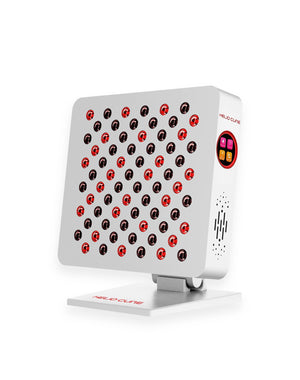
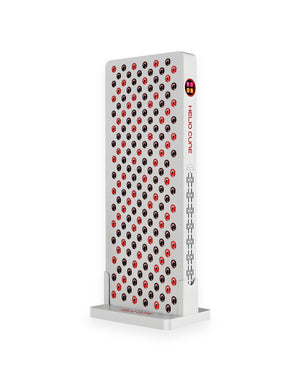
Yes. Helio Cure panels emit 630, 660, 810, 830, 850, and 1064 nanometers, covering 830 nm, cited most for chronic pain and plantar fasciitis, and 1064 nm, cited most for frozen shoulder and shoulder pain.
References
- https://pmc.ncbi.nlm.nih.gov/articles/pmid/37928139/
- https://pubmed.ncbi.nlm.nih.gov/14530658/
- https://pmc.ncbi.nlm.nih.gov/articles/pmid/28740325/
- https://linkinghub.elsevier.com/retrieve/pii/S1360-8592(20)30179-0
- https://journals.sagepub.com/doi/10.1136/aim.23.1.13
- https://pmc.ncbi.nlm.nih.gov/articles/pmid/39730820/
- https://journals.sagepub.com/doi/10.1177/0269215520941059
- https://pubmed.ncbi.nlm.nih.gov/2142908/
- https://pmc.ncbi.nlm.nih.gov/articles/pmid/37374210/
- https://journals.sagepub.com/doi/10.1089/pho.2011.3030
- https://dx.doi.org/10.1007/s10103-014-1554-z
- https://pmc.ncbi.nlm.nih.gov/articles/pmid/38280042/
- https://pubmed.ncbi.nlm.nih.gov/19913903/
- https://waltpbm.org/wp-content/uploads/2021/08/Dose_table_780-860nm_for_Low_Level_Laser_Therapy_WALT-2010.pdf